


Rice farming is one of the most exciting and rewarding additions in Farming Simulator 25, bringing a new level of depth to crop management. FS25 introduces two varieties of rice, regular (wet) rice and long grain rice, each requiring different growing techniques. In this detailed guide, you’ll learn how to create rice paddies, plant regular rice, manage water levels, and harvest efficiently. Even if your map doesn’t include rice fields by default, such as Riverbend Springs, you’ll be able to build your own and master every step of the process.
Step 1: Setting Up Your Rice Field
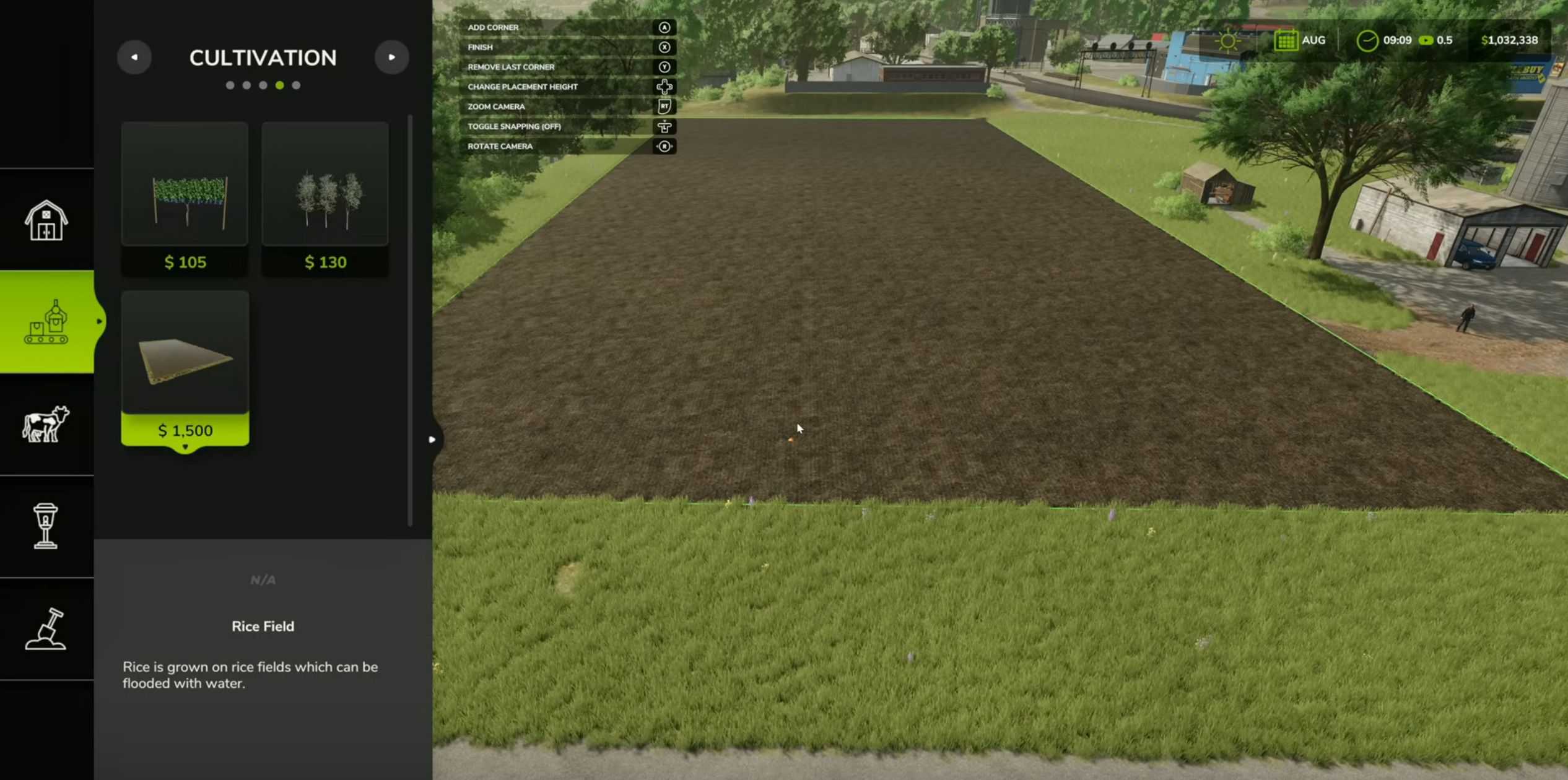
To grow regular (wet) rice, you’ll first need to build a rice paddy. Since some FS25 maps don’t include rice fields, you’ll create one manually.
- Choose a flat area on your map – Field 82 on Riverbend Springs works perfectly.
- Enter Build Mode, open the Cultivation section, and select “Rice Field.”
- Mark the corners to shape your paddy – you can build it anywhere, even outside predefined fields.
- Once finalized, FS25 automatically levels the ground and builds a ridge around the field to prepare it for flooding.
This step lays the foundation for proper rice growth. Without an even surface and ridge, flooding won’t work correctly.
Step 2: Flooding the Field
Rice thrives in flooded conditions, so the next step is to prepare your field with water.
- Locate the pump at the edge of your rice field.
- Activate the pump to start filling the area. The flooding process typically takes 30–45 in-game minutes.
- Wait until the water covers the field completely – your rice won’t grow properly if the ground is only partially flooded.
Flooding ensures that your rice plants have the right environment for the early growth stages, improving yield and health.
Step 3: Planting Regular Rice
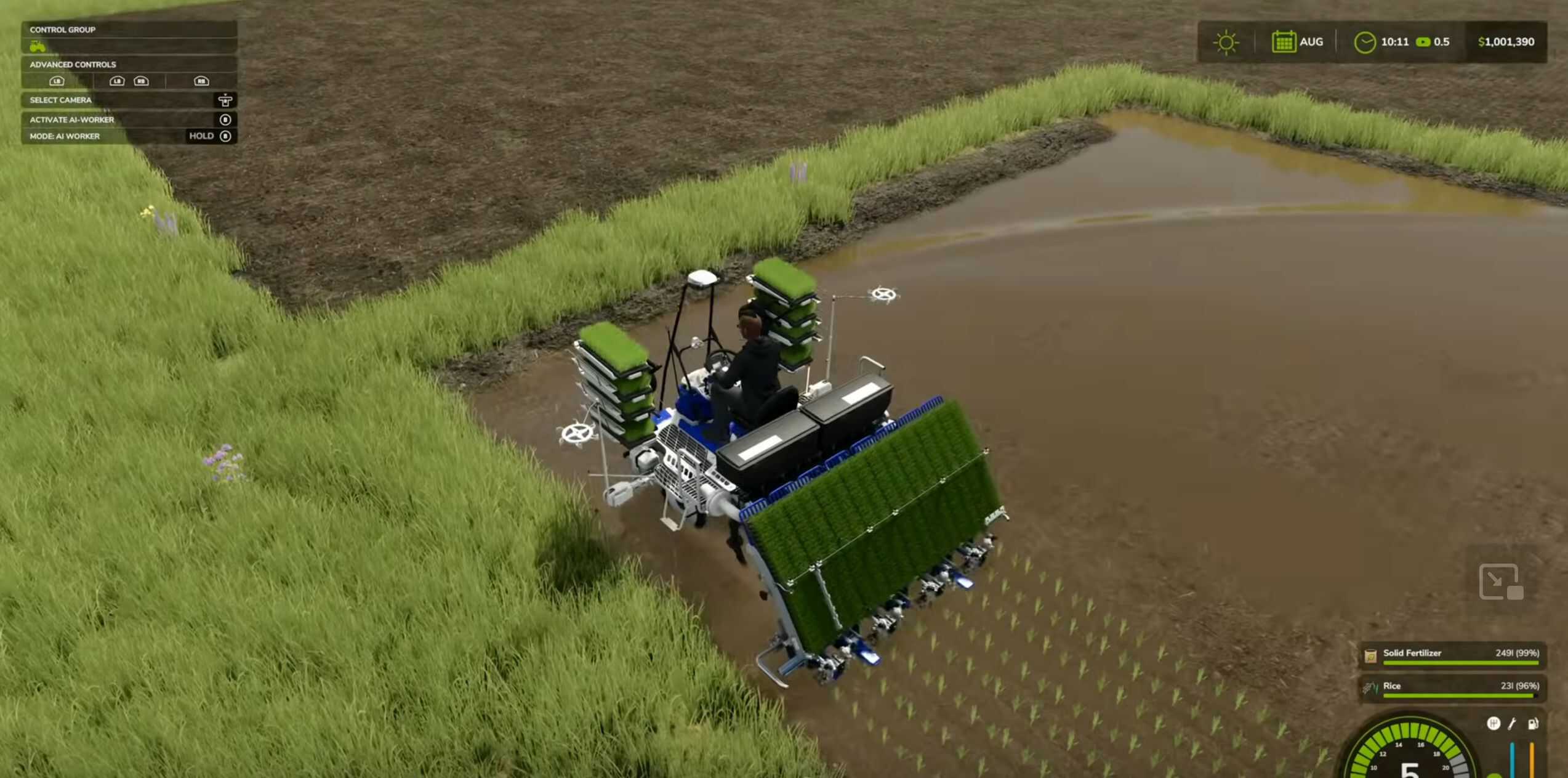
Regular rice requires special equipment and can only be planted while the field is submerged.
- Buy the Iseki Seeder from the “Special Crops” section in the in-game store. It’s the only seeder compatible with wet rice.
- Fill it with rice saplings and solid fertilizer (capacity: 250 liters).
- Ensure the field is fully flooded, then start planting directly into the water.
The seeder won’t operate on dry ground, so double-check your water levels before starting.
Step 4: Managing Water Levels and Growth Stages
Rice farming success depends heavily on water management.
- Keep your field flooded for the first two months after planting to promote strong growth.
- Once the rice reaches the third growth stage, drain the water completely to prevent the plants from drowning.
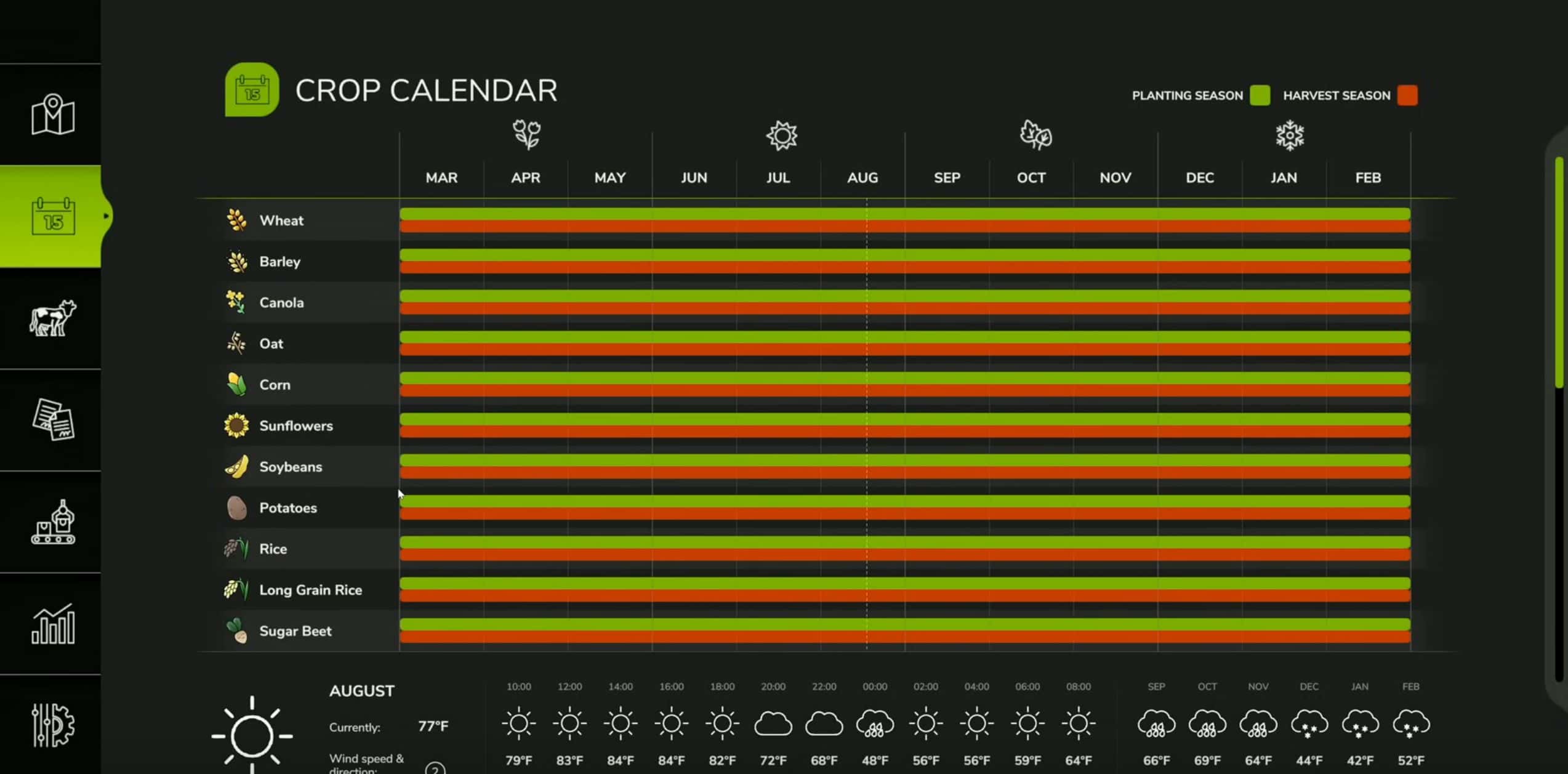
- If seasonal growth is active, align planting and draining times with the crop calendar.
Proper timing ensures you get a healthy harvest without losing crops to overwatering.
Step 5: Fertilizing for Maximum Yield
Fertilization is key to achieving high rice yields in Farming Simulator 25.
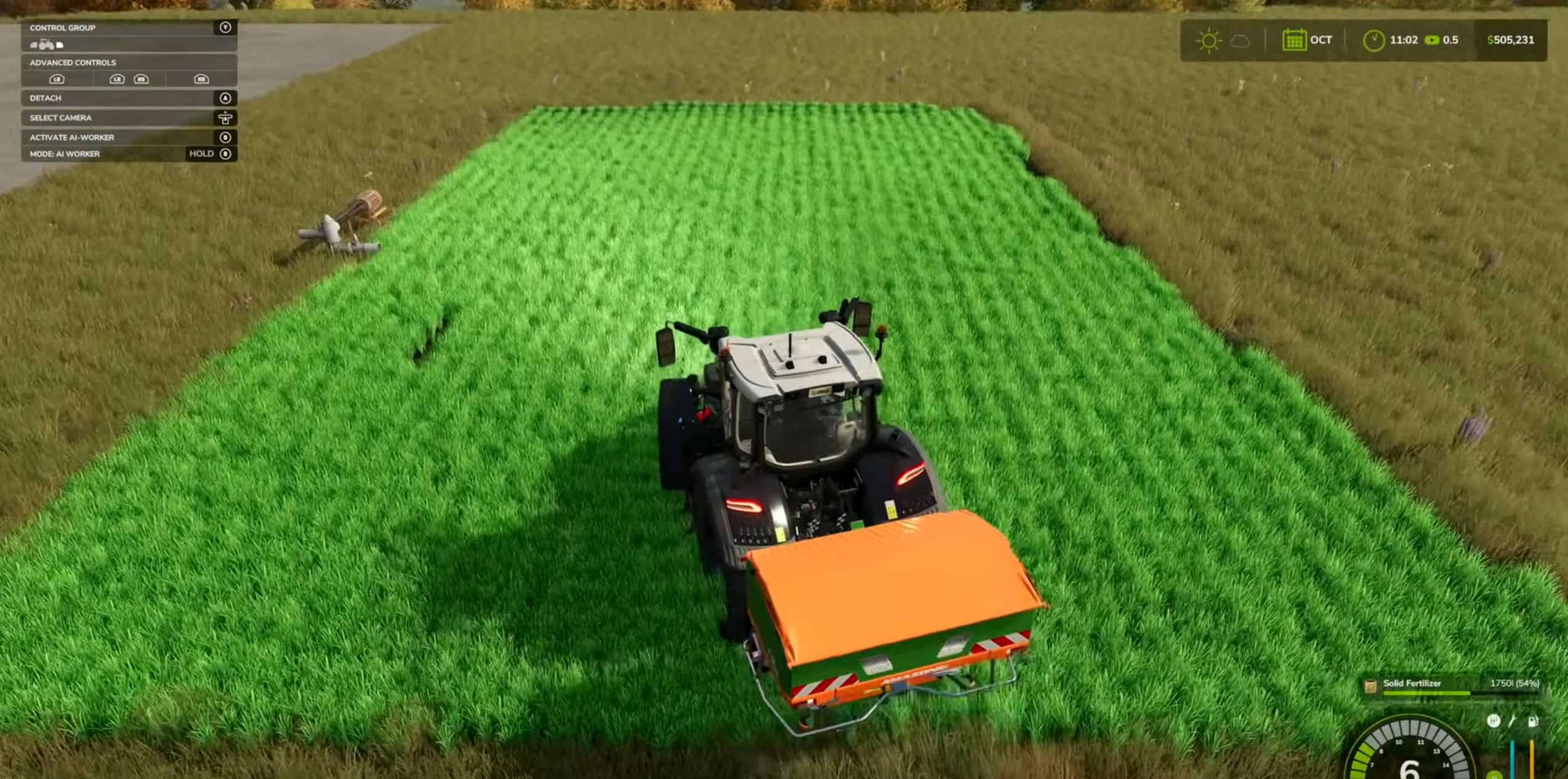
- After planting, apply an additional fertilizer layer using a narrow-tire spreader to avoid damaging the crops.
- Complete fertilization before the field dries, since the process works best on moist or flooded soil.
Double fertilization can increase your yield by up to 30%, making it a must for efficient farming.
Step 6: Harvesting the Rice
When your rice plants reach full maturity, it’s time to harvest.
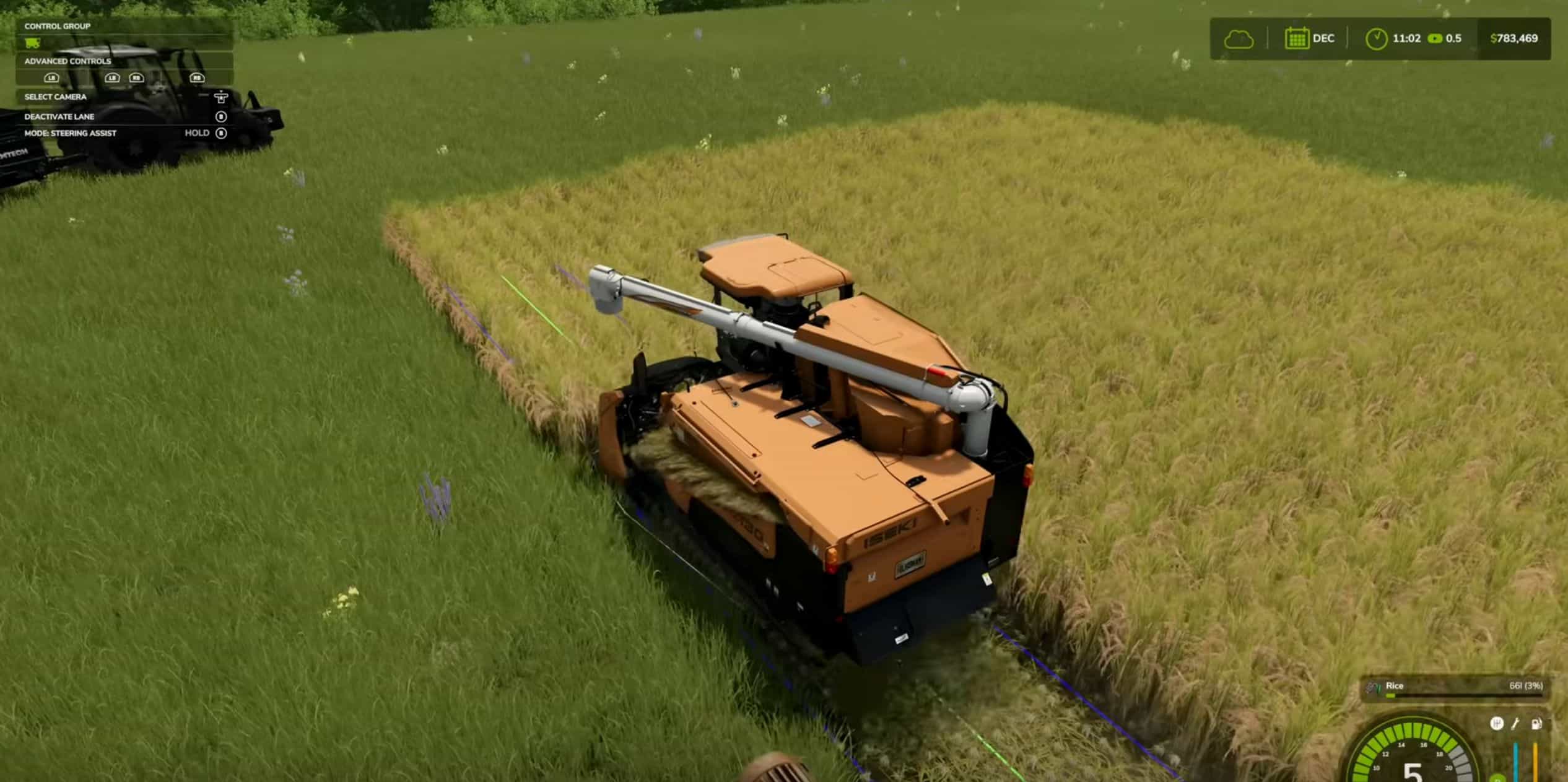
- Purchase the Iseki Rice Harvester – a specialized machine built for wet rice.
- Start harvesting once the crop turns golden brown and fully dries out.
- Unload the harvested rice into a trailer and transport it to your silo or selling point.
Harvesting too early can reduce yield, so make sure the crop is completely mature before cutting.
Step 7: Selling and Processing Your Harvest
After harvesting, you can either sell your rice immediately or process it for higher profit margins.
- Sell directly at local markets or designated rice buyers for quick income.
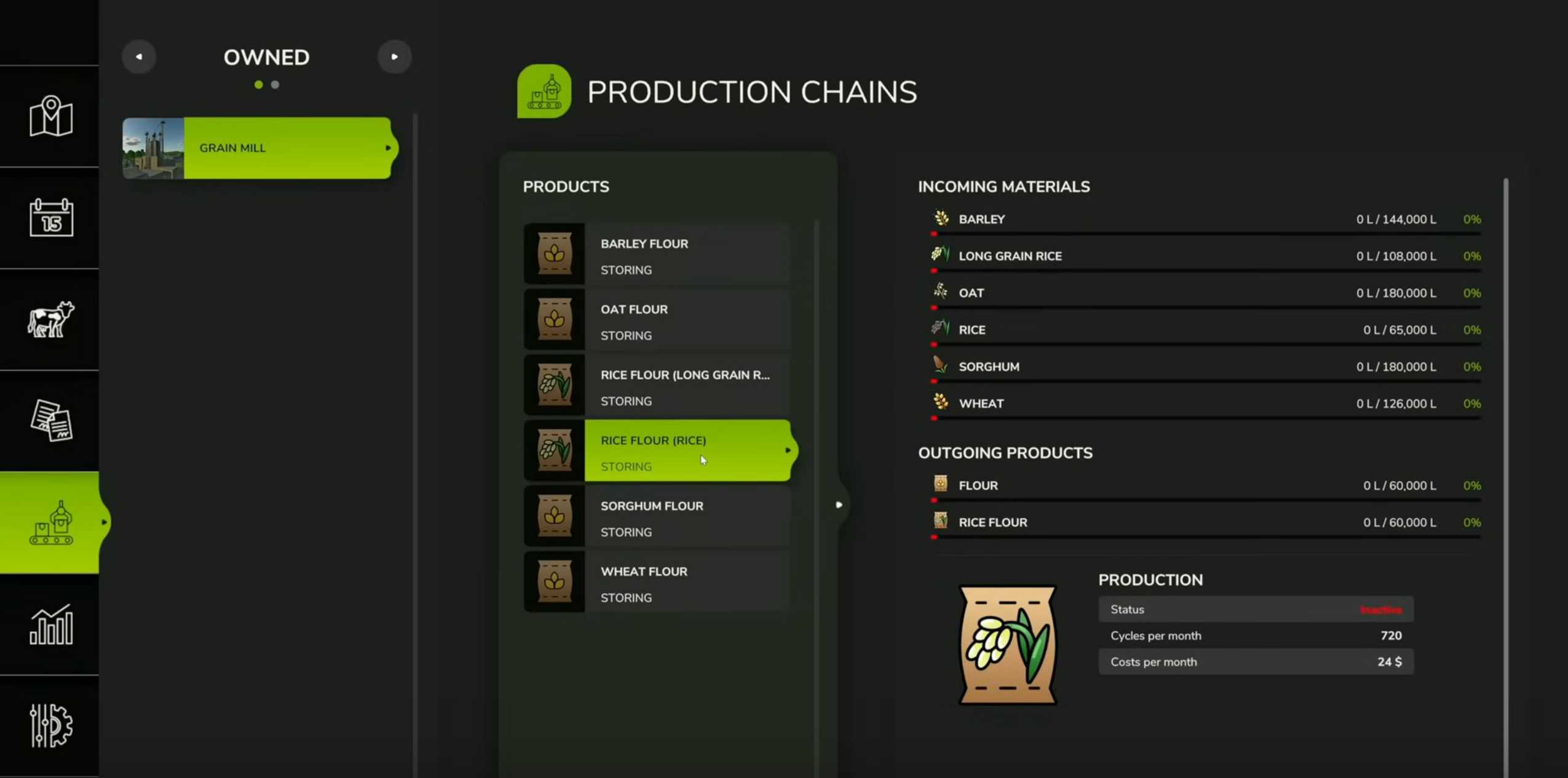
- Or take it to the Grain Mill to process into rice flour, oil, or packaged rice, which sells for more.
- Always check market prices before selling to maximize your earnings.
Processed goods tend to yield higher profits, especially during peak demand periods.
Step 8: Preparing for the Next Cycle
To keep your fields productive, perform essential maintenance after harvest:
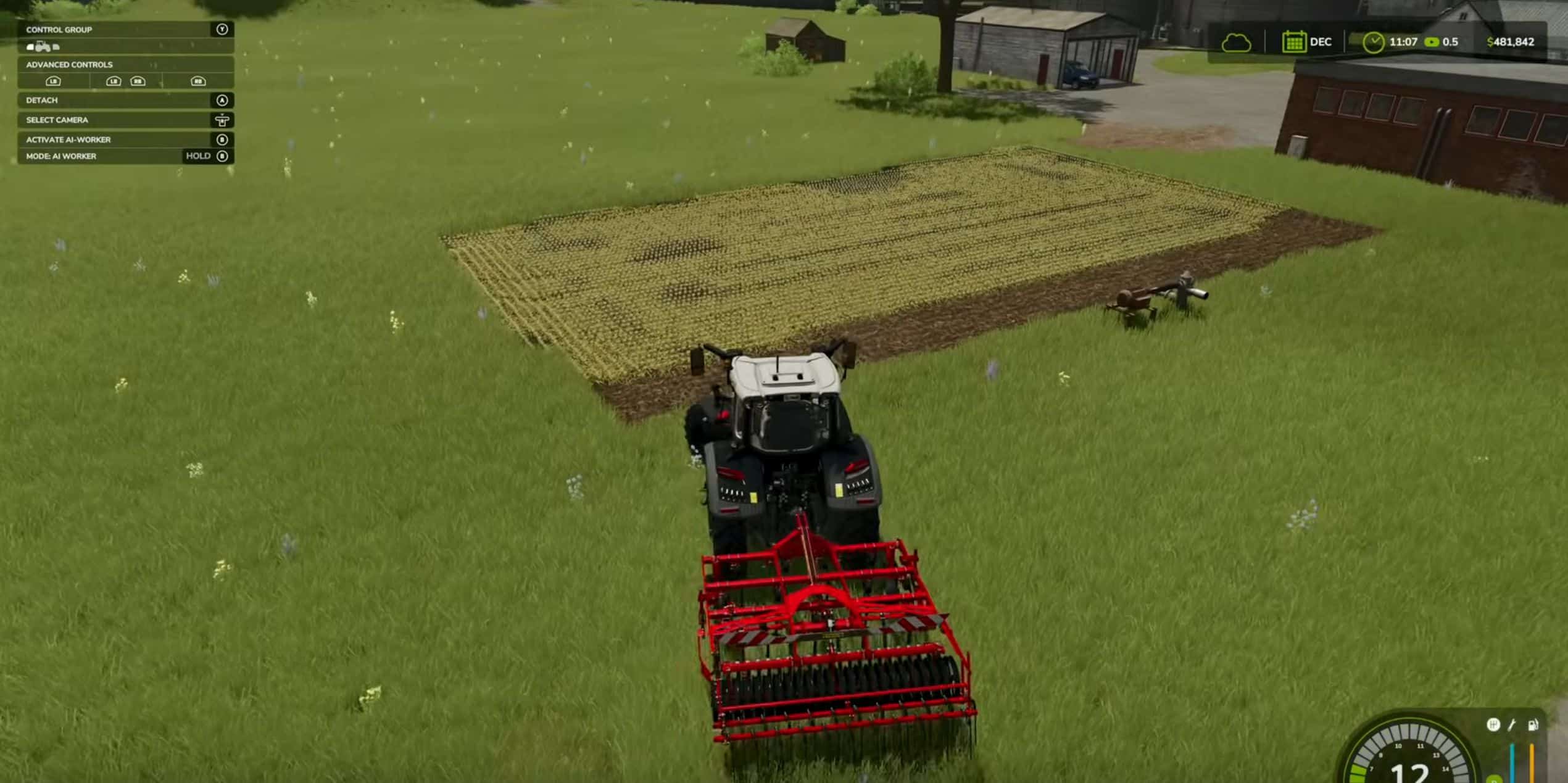
- Cultivate the field to clear remaining stalks and debris.
- Apply lime to maintain optimal soil pH.
- Flood the field again when you’re ready for a new planting cycle.
Maintaining your rice paddies between cycles helps ensure consistent yields across multiple harvests.
Pro Tips for Efficient Rice Farming in FS25
- Use AI workers for repetitive tasks like seeding and harvesting to save time.
- Keep a close eye on the seasonal calendar if you play with growth cycles enabled.
- Regular rice grows faster and yields more profit early in the game compared to long grain rice.
- Invest in efficient machinery early – it will pay off in your second harvest.
- Maintain proper water management at every stage to avoid crop loss.
Mastering rice farming in Farming Simulator 25 is all about patience, precision, and good planning. With the right setup, proper flooding, and timely harvesting, you’ll turn your rice fields into one of the most profitable parts of your farm. Whether you’re experimenting on Riverbend Springs or designing custom fields on another map, these steps will help you make the most of this exciting new crop type.
Start building your rice paddy today, keep the water flowing, and get ready to enjoy one of FS25’s most rewarding farming experiences.
FAQ:
1. How do you start rice farming in Farming Simulator 25?
To start rice farming in FS25, create a rice field using Build Mode, level it, and flood it with water before planting rice saplings with the Iseki Seeder.
2. What equipment do I need for rice farming in FS25?
You’ll need the Iseki Seeder for planting and the Iseki Rice Harvester for harvesting. Both are found in the Special Crops section of the shop.
3. Can you grow rice on any map in FS25?
Yes. Even maps without pre-made rice paddies, like Riverbend Springs, allow players to create custom rice fields anywhere on flat terrain.
4. How long does it take for rice to grow in Farming Simulator 25?
Rice typically takes two in-game months to mature. Keep the field flooded during early growth and drain it at the third stage for best results.
5. How do you manage water in rice fields?
Use the field pump to flood your paddy for two months after planting, then drain it once the plants mature to avoid damage or yield loss.
6. How do you increase rice yield in FS25?
Apply fertilizer twice – once before and once after planting. Maintain ideal water levels and harvest only when rice is fully matured for maximum yield.
7. Where can you sell rice in Farming Simulator 25?
You can sell rice directly at markets or process it at the Grain Mill into rice flour, oil, or packaged rice for higher profit margins.
8. Is regular rice different from long grain rice in FS25?
Yes. Regular (wet) rice grows in flooded fields and offers faster yields, while long grain rice requires dry soil and different machinery.